THE WEATHER
Freeze, then thaw
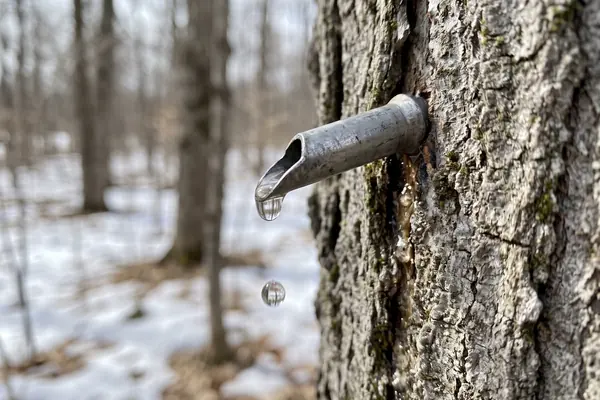
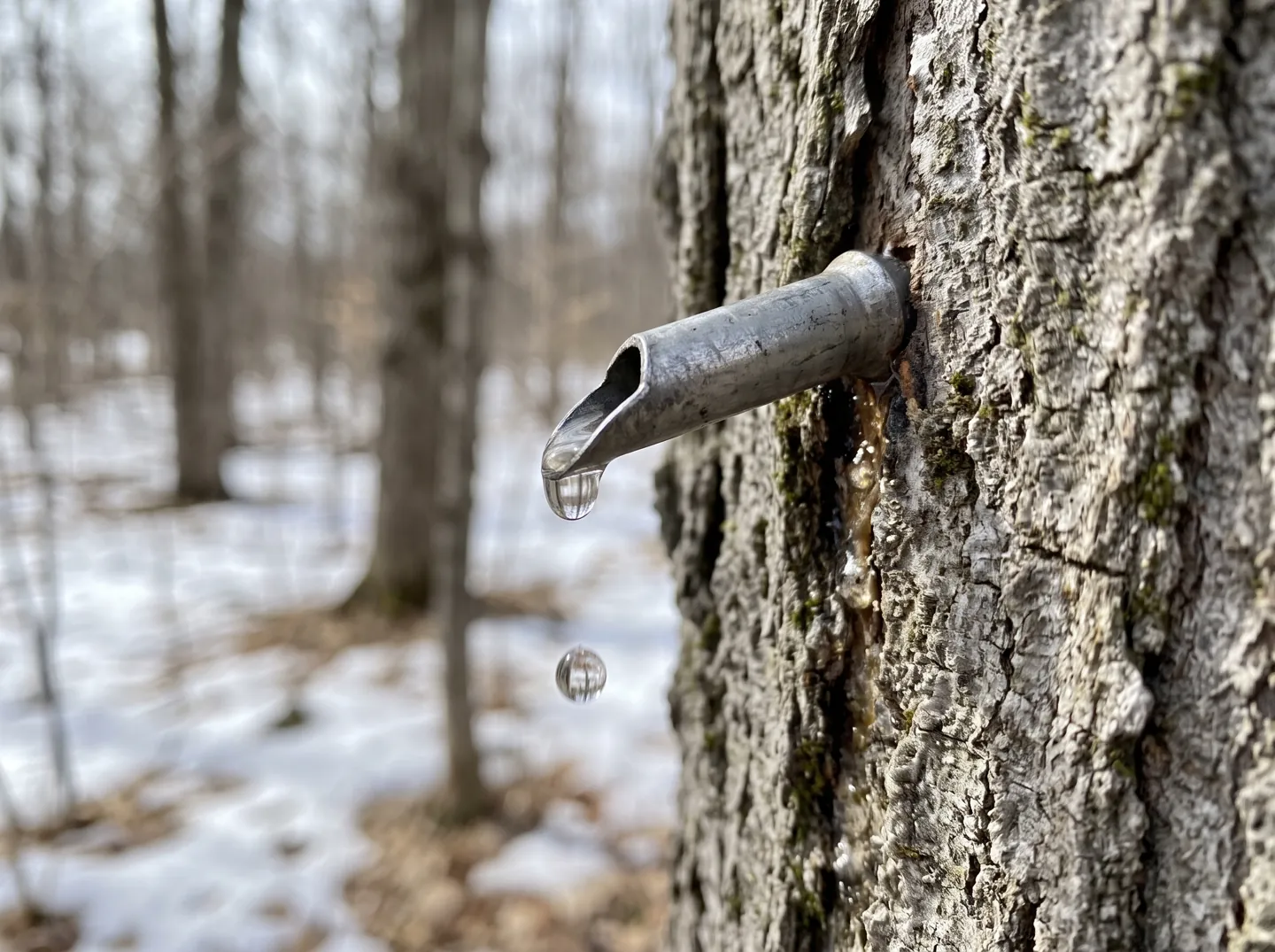
Sap runs when days warm to about 40°F (4.4°C) after nights below freezing. Rising temperature builds pressure inside the tree.
What happens inside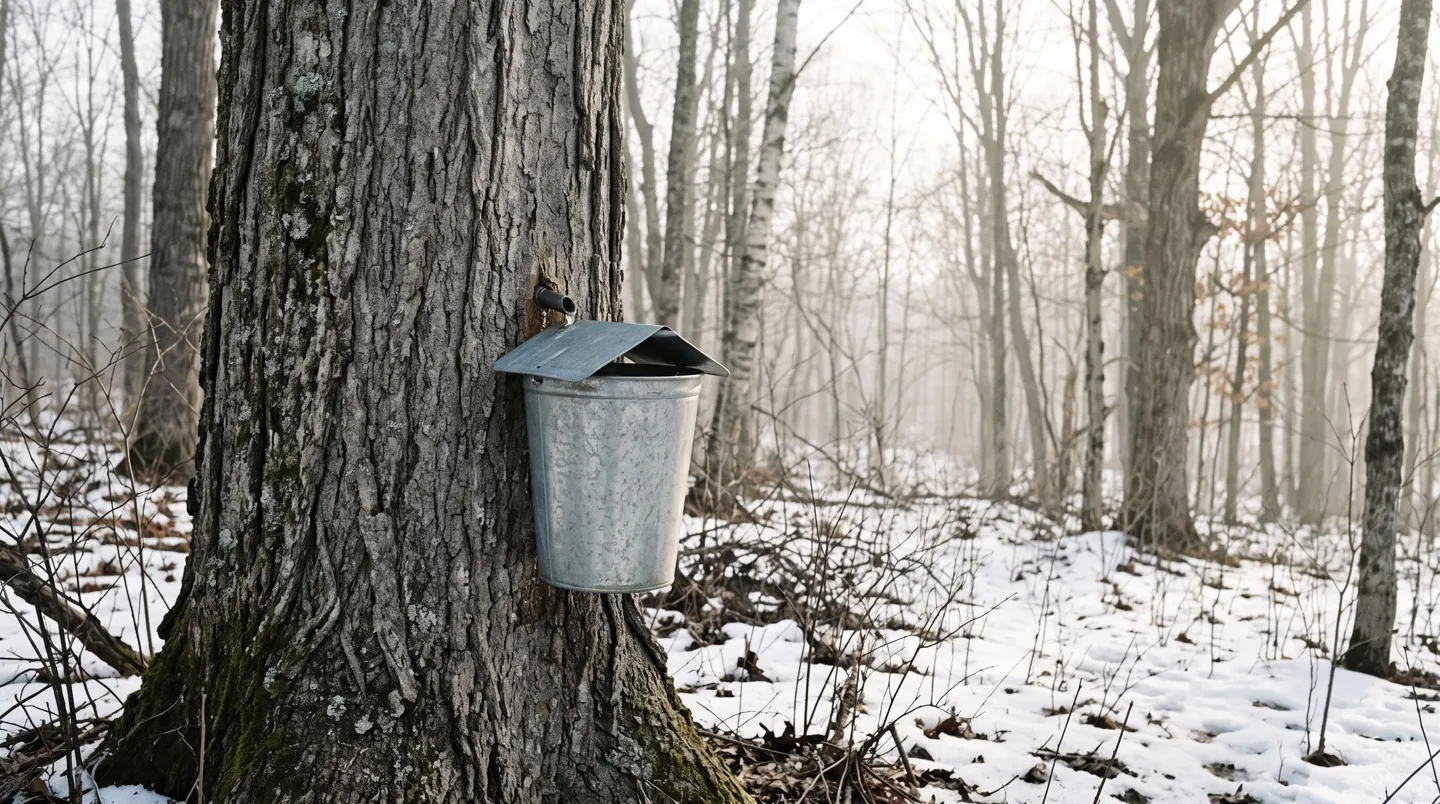
HOW SUGARING WORKS
ONE TAP per tree to start
AI-generated image, not a photograph of a real person or place.
Maple syrup starts as sap that is mostly water.
A small hole, a spout and a bucket catch it in late winter, and a long boil takes the water away. Nothing is added. University extension guides explain how to do it without hurting the tree.
THE SHORT ANSWER
Three things decide a good season:
the weather, the tree and the boil.
THE WEATHER
Sap runs when days warm to about 40°F (4.4°C) after nights below freezing. Rising temperature builds pressure inside the tree.
What happens insideTHE TREE
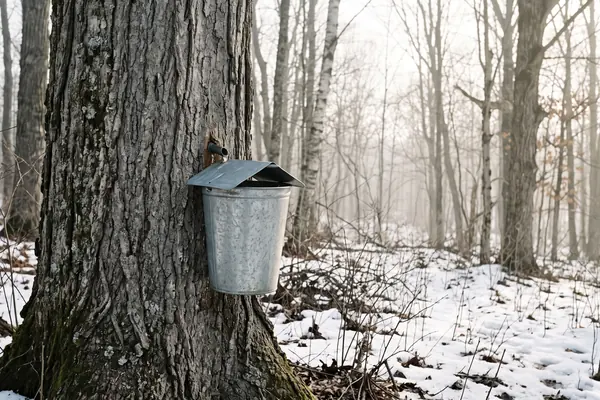
University of Maine Extension says a tree should be at least 10 inches across at 4½ feet before it is tapped, and never take more than three taps.
Size up a treeTHE BOIL
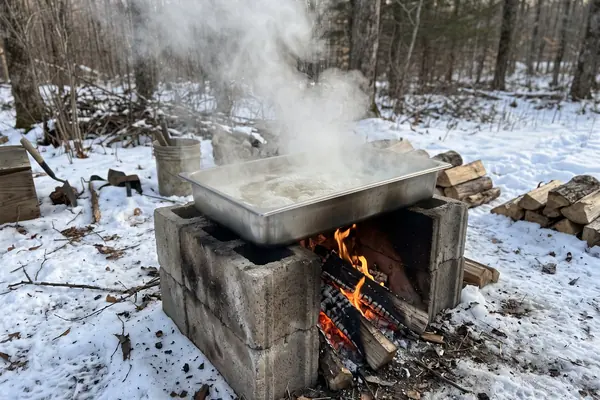
Sap is boiled until it reaches 66–69% sugar, about 7.1°F above the boiling point of water. Nothing is added.
The steps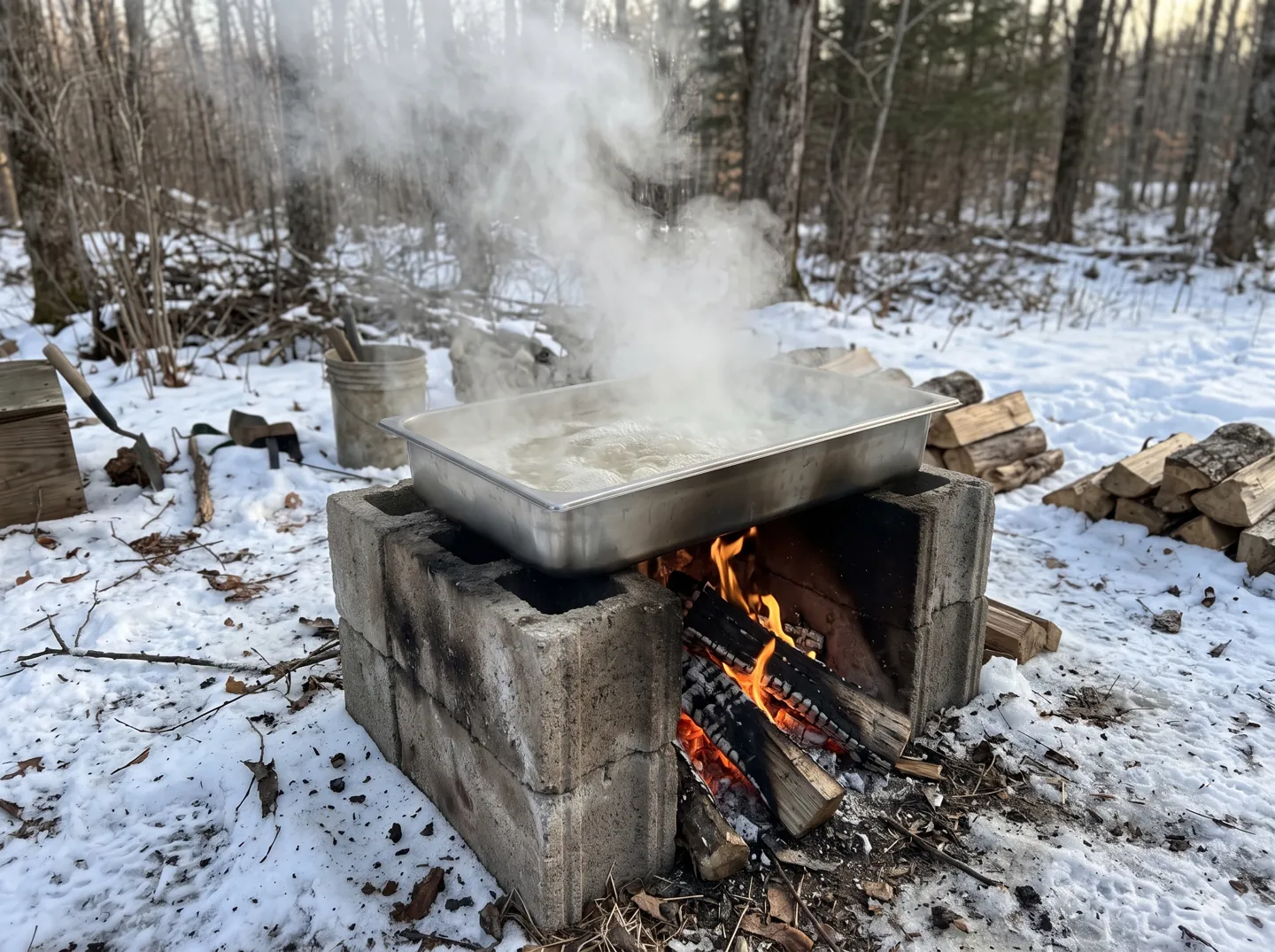
FROM TREE TO JAR
University of Maine Extension's small-scale method, in four stages. Boiling sap makes a lot of steam, so the guide advises boiling outdoors or with strong ventilation.
A sharp 5/16-inch bit, 1.5 to 2 inches deep, level, in one quick in-and-out. Keep two feet above or below, and six inches beside, any old taphole.
Tight enough not to pull out by hand, never so hard it splits the wood. Tap on days above freezing.
Sap sours like milk if left in the sun. Empty covered buckets often and boil as soon as you can.
Finish at 66–69% sugar, filter out the sugar sand while hot and pack the syrup at 180–190°F.
TWO NUMBERS WORTH KNOWING
How much sap goes into a litre of syrup,
and where nearly all of it comes from.
30–45 L
Litres of sap for one litre of syrup
About the amount one tree gives over a sugaring season. University of Maine Extension puts it as 10 to 15 gallons of sap for one quart of syrup, depending on the sap's sugar content.
SAP TO SYRUP · CANADIAN ENCYCLOPEDIA
75+%
Canada's share of world maple syrup, 2025
Canada and the United States are the only countries producing maple syrup at commercial scale. In 2025, 90.0% of Canada's production came from Quebec; the US made about 25%.
WORLD SUPPLY · AGRICULTURE CANADA
Canadian producers harvested more than 113.4 million kilograms of maple syrup in 2025, and 4.9% of Canada's maple exports went to the United Kingdom (Agriculture and Agri-Food Canada).
HOW MANY TAPS?
Pick a trunk diameter, measured at 4½ feet above the ground. The bar shows how many tapholes the University of Maine guide allows.
Diameter is measured at 4½ feet (about 1.4 m). Damaged or stressed trees should be treated as smaller than they look.
INSIDE THE TREE
In late summer and autumn, maples store starch in the sapwood, especially in ray cells. When the wood warms to around 40°F, enzymes turn that starch into sugar, mostly sucrose, which passes into the sap. Warmth builds pressure inside the trunk; a cold night lets the tree draw water back up through its roots, ready for the next day's flow.
The Canadian Encyclopedia says the season lasts about six weeks in early spring, that a tree releases about 7% of its sap during the harvest, and that tests confirm this does no long-term damage. Many tapped trees are well over 100 years old.
In conversation
Following the guidelines, it is considered sustainable. The Canadian Encyclopedia says a tree releases about 7% of its sap in a season and tests confirm no long-term damage; extension guides limit the number and placement of tapholes to protect the tree.
University of Maine Extension says a taphole averages 5 to 15 gallons of sap a season, sometimes 40 to 60 in good conditions, and with good practice each tap yields roughly a quarter of a gallon of syrup.
Sap flow is driven by freeze and thaw cycles: days of about 40°F or warmer after freezing nights. In southern Maine that is typically mid-February to early April.
Sugar maple usually has the sweetest sap, and red maple is also used. Average sap is about 1.5 to 3% sugar; the Canadian Encyclopedia gives 2 to 5% at the height of the season.
When it reaches 66 to 69% sugar. Below 66% it can ferment or grow mould; above about 68.9% sugar crystals can form in storage. Opened syrup should be kept in the fridge.
Each figure on this page comes from the sources below.
ABOUT THIS NAME
bigtapper.com is part of the DoodleSale portfolio. It isn't in an auction right now, but you can ask about leasing it.